Thomson Linear Motion Optmized

Ball Screws - Return Systems
Design and Theory
With ball
re-circulation, there is a need to have a ball return system. There are
three main types of ball return systems:
- Internal with end cap return
- Button return
- External return (or tube return)
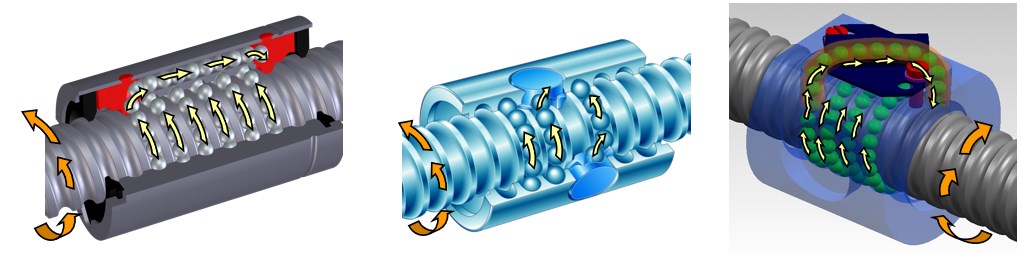
Internal, button and External return
Internal, button and External return
Internal with end cap return
- Balls are picked up from the ball groove and transferred to the other end in an internal channel
- No external protrusions to complicate mounting
- Low noise and vibration (compared to external returns)
Button return
- Balls are picked up from the ball groove and transferred over ONE track
- No external protrusions to complicate mounting
- Low noise and vibration (compared to external returns)
- Balls are picked up from the ball groove and transferred to the other end in an external tube
- Cost effective, easy to install, maintain and repair
In the external return design there are two ways in which the balls can be picked up from the ball groove. The simplest way is using a the edge of the tube cut to form a finger that picks up the balls from the ball groove. An alternate method is utilizing a deflector. These two methods are illustrated in the image below.
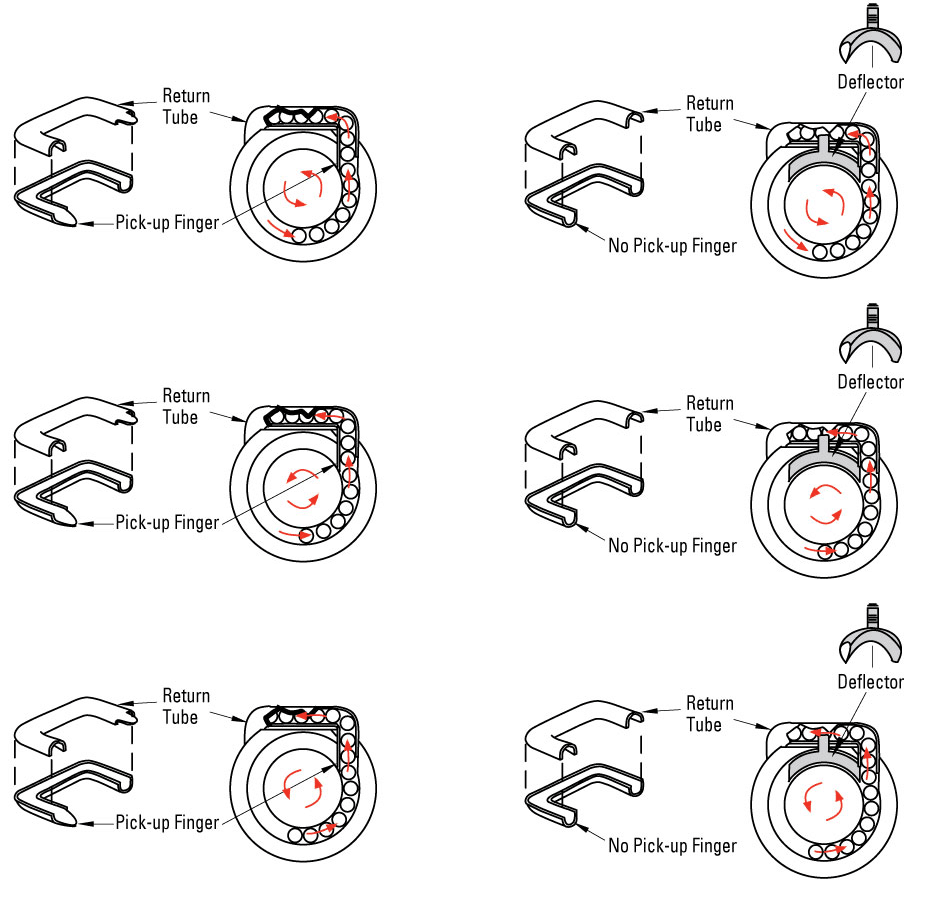
Pick-up finger vs Deflector
Pick-up finger vs Deflector
Ball nuts using the deflector return system are able to operate at a higher speeds than similar nuts utilizing pickup fingers.
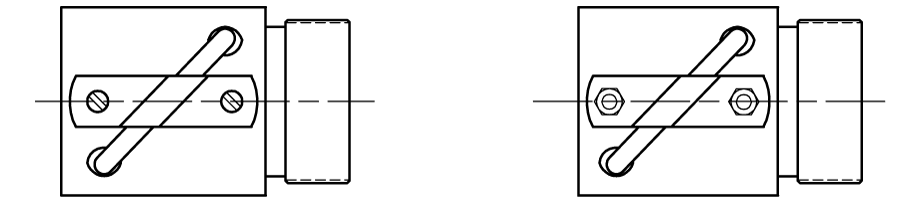
Ball nuts using a deflector return system are identified by the threaded deflector studs and nuts holding on the guide clamp. Ball nuts with pick-up fingers have screws holding the guide clamp in place.
Pick-up finger vs deflector identification
The ball nut on the left has screws holding the return tube clamp down. This would be a pick-up finger design. The ball nut on the right has nuts on studs holding the return tube clamp down. This would indicate a deflector design. The stud is part of the deflector.
Pick-up finger vs deflector identification
The ball nut on the left has screws holding the return tube clamp down. This would be a pick-up finger design. The ball nut on the right has nuts on studs holding the return tube clamp down. This would indicate a deflector design. The stud is part of the deflector.