Thomson Linear Motion Optmized


Ball Screws - Definitions
Design and Theory
The following are some definitions of common terms used with ball screws.
NEVER exceed the Static Load Rating


Static load Rating
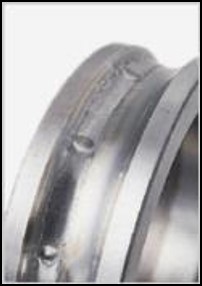
Static Load Rating is the maximum load capacity the ball screw can hold while NOT turning. Applying a load above the static rating can cause brinelling of the ball track or splitting the ball bearings in half.
NEVER exceed the Static Load Rating
Example of Brinelling
Example of Brinelling
Dynamic load rating
Dynamic load rating is the load that an assembly can maintain for:
- 1 million inches of travel - imperial
- 1 million revolutions - Metric
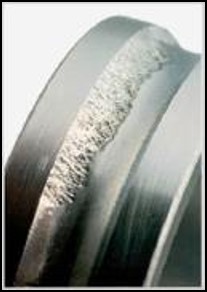
Example of spalling
Example of spalling
Ball Circle Diameter
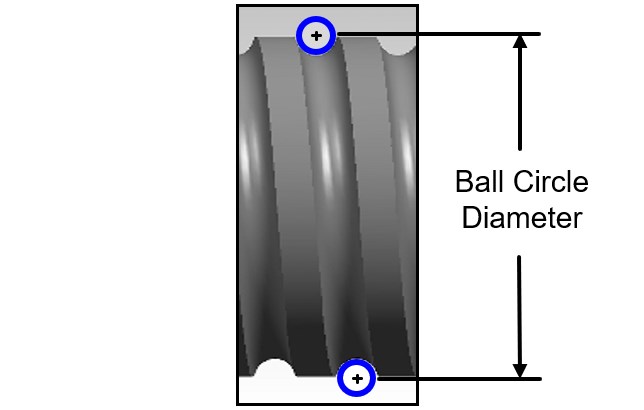
Ball Circle diameter or BCD is the distance between the centerlines of two opposing balls in contact with the screw. The dimension is shown in the image below.
Ball Circle Diameter
Ball Circle Diameter
Thread direction
The thread direction refers to the direction of the thread helix around the shaft. As with regular bolts and nuts right hand is used as standard and left hand is only used when there is a specific requirement a left hand thread. In ball screws there is rarely a need for a Left hand threaded screw. Often there are only a few sizes offered with Left hand thread.
Right hand and Left hand thread screws
Right hand and Left hand thread screws
If there is a need for an assembly where both ball nuts come together and move apart as the shaft is turned in one direction, a right hand and left hand screw can be useful. A right hand and left hand screw can be created by forming the right hand threads and left hand threads into one shaft or by coupling 2 shafts together. Either method may have an area in the center where there may be no thread or imperfect threads.
Right hand and left hand thread assembly