Thomson Linear Motion Optmized

Shafting - Shaft Properties
Design and Theory
While on the surface, shafts may appear the same, there are significant performance differences due to the
manufacturer’s selected standards and the manufacturing processes used
to achieve them.
Roundness
Shaft roundness is vital for linear applications such as spindles
and guide rods where accuracy, life or precision is paramount. Roundness
ensures uniform distribution of bearing loads for maximized bearing
life, longer travel life and improved positional accuracy.
Round
shafts can be deceiving to the eye and appear anything but round when
properly evaluated using precision tracing techniques.
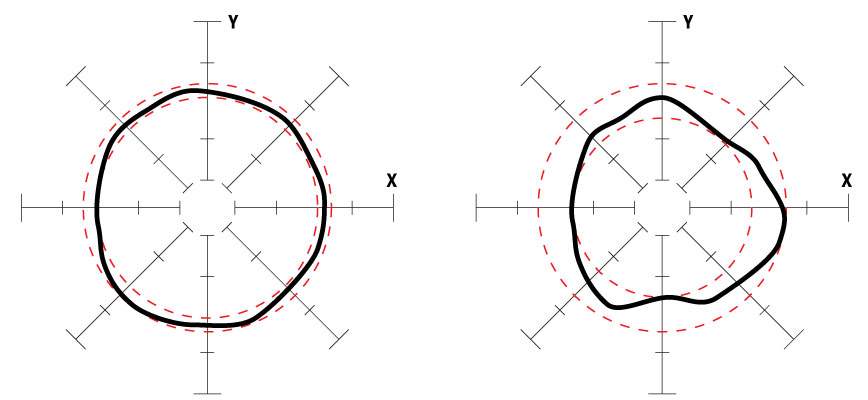
Two plots of shafts with different roundness tolerances
Two plots of shafts with different roundness tolerances
Surface finish
Surface finish is a key factor affecting travel life, load levels, frictional
resistance and smoothness of travel. Industry leading cataloged
surface finish is of 8 Ra max. Excellent surface finish and hardness
maximize the efficiency and life of linear bearings, shaft riding seals and overall visual appearance.
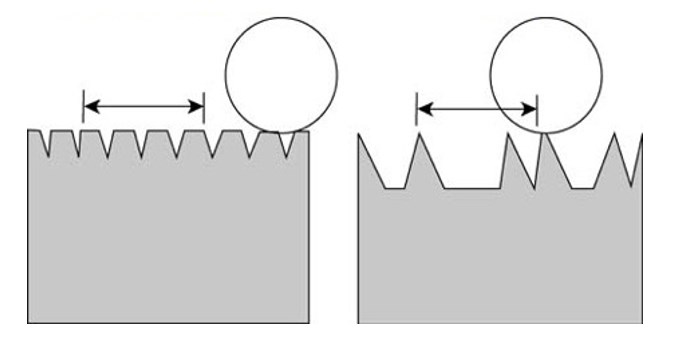
Exaggerated view of a ball bearing on different surfaces
Exaggerated view of a ball bearing on different surfaces
Straightness
Straightness is the most vital parameter to positioning accuracy for a
Linear guide system. The image below shows a typical method for measuring straightness. With the shaft supported at two points 0.2 times the length from the ends, the shaft is rotated and the total deviation indicated is recorded. Beware that even if a shaft is straight when it is made, handling or machining of shafting can cause
the material to bend once it leaves the factory. Care to preserve or restore shaft straightness before installation may be necessary.
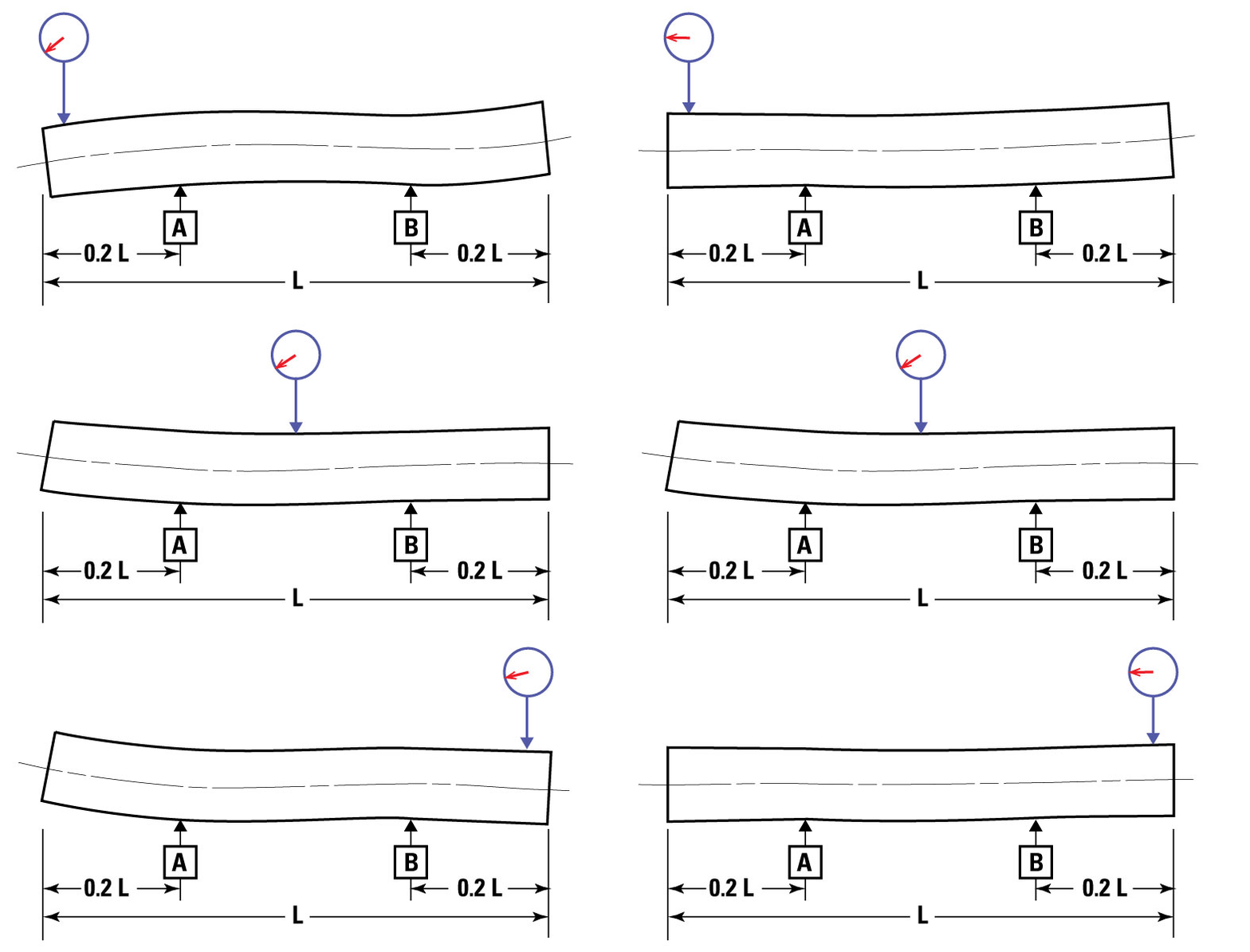
Checking the straightness using dial indicators
Checking the straightness using dial indicators
Cylindricity
Cylindricity is a measure of the degree of conformance of the outside
surface (diameter along the length of the shaft) to a true cylinder.
True conformance (high cylindricity) ensures the benefits of roundness,
diameter and straightness are present over the shaft length, or working
surface, and not just in a particular location. This ensures uniform
distribution of bearing loads, increases load capacity in the working
area of the bearing, maximizes bearing life, and increases travel life.
Taper
Taper is a component of cylindricity. In linear bearing applications,
taper can cause one portion of the linear bearing to be loaded higher
than the other. This can cause dramatic reduction in travel life or load
capacity. As taper increases, balls go in and out of preload, causing
premature wear and reduction in travel life.
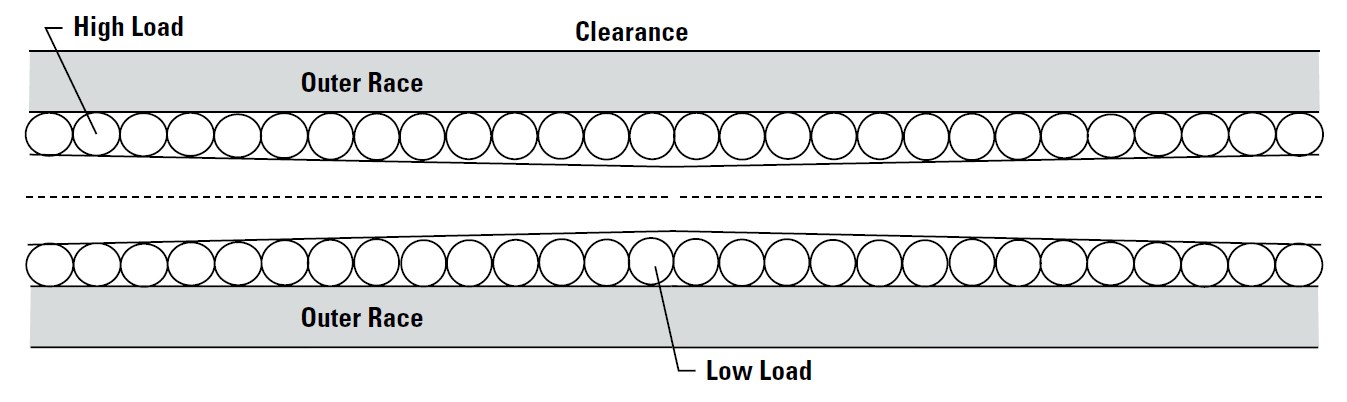
Exaggerated illustration of taper and ball loading