


Medical imaging technology is advancing rapidly, bringing new opportunities and challenges for machine designers. Systems that once required dedicated hospital rooms and significant floor space are becoming more compact, faster, mobile and capable of delivering increasingly detailed clinical insight. From advanced CT scanners to imaging platforms integrated with surgical robotics, imaging equipment is evolving toward more point-of-care (POC) solutions to meet rising expectations for diagnostic accuracy, procedural guidance and operational efficiency.
Point-of-care imaging enhances healthcare delivery by reducing transport time, expanding access in remote or decentralized settings and enabling faster clinical decision making. Providing care across multiple locations also lowers treatment costs through streamlined workflows and more efficient use of equipment and energy. This enables faster diagnostics, allowing providers to serve more patients each day, improving resource utilization and broader access to care. The shift from centralized imaging environments to more distributed POC models is not only transforming imaging platforms but also fundamentally redefining motion system requirements.
As systems become more compact, mobile and performance driven, engineers must reframe how motion solutions are designed, integrated and optimized. The following trends present opportunities for OEM designers to shape the next generation of medical imaging systems:
- Miniaturization
- Dynamic Imaging
- Surgical Robotics
- Efficiency
- Integrated Systems
- Supply Chain Optimization
Miniaturization
Miniaturization is a key driver in modern imaging system design, enabling more compact, mobile platforms that can operate beyond traditional hospital settings. OEM designers leverage this to provide more economical systems to point-of-care to ensure return on investment. Smaller, portable imaging systems like C-Arm scanners, mobile ultrasound devices and compact X-ray machines allow clinicians to bring imaging closer to the patient, improving workflow flexibility and reducing delays in diagnosis and treatment.
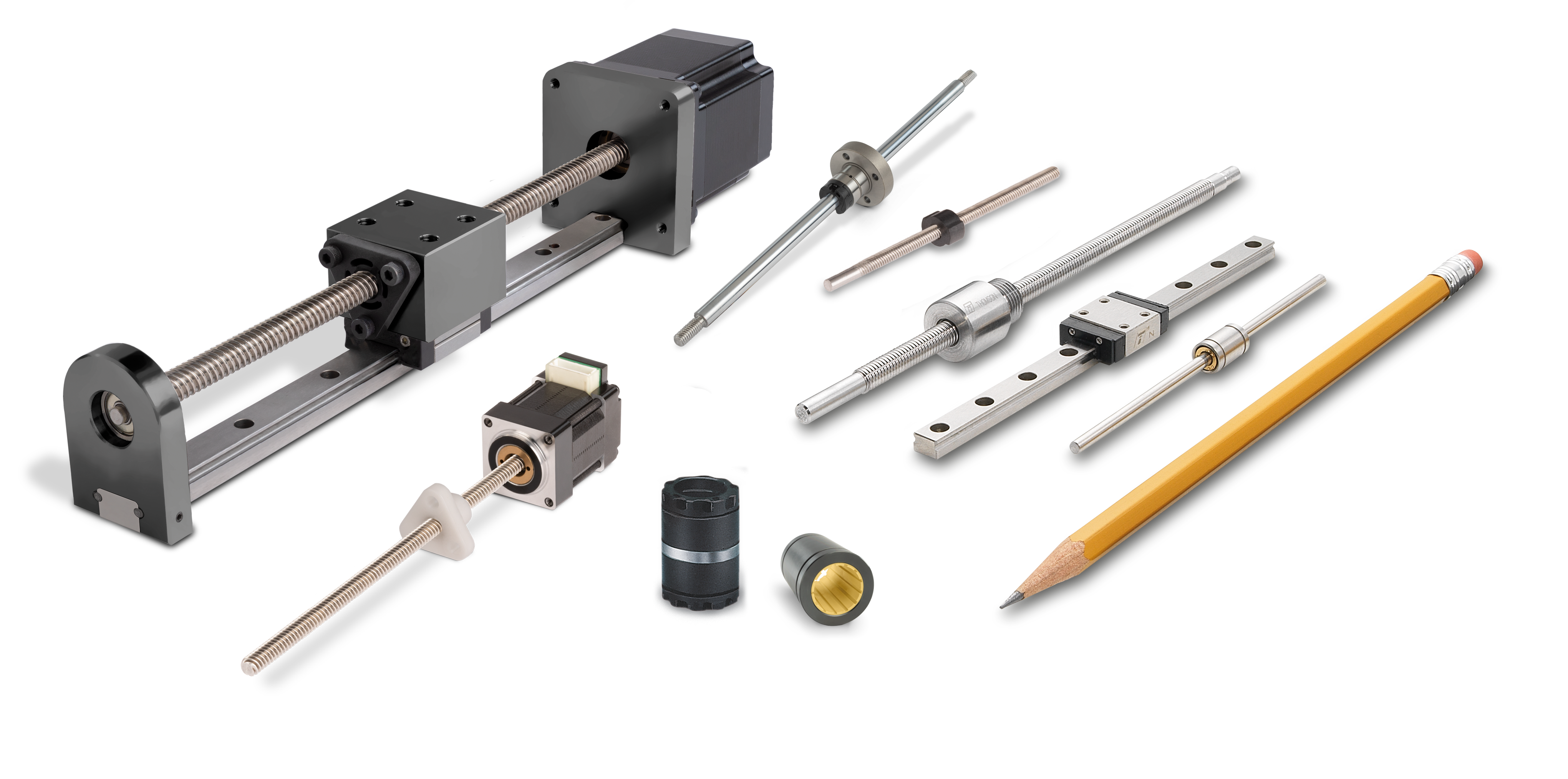
Figure 1. To meet the growing demand for devices and machines, OEM designers can take advantage of miniature linear motion components such as ball and lead screws, linear bearings, and profile rail guides.
As systems become more compact, motion technologies must deliver the same levels of precision, reliability and control within significantly reduced space envelopes. This has led to increased integration of guides, screws, motors, gearheads and braking technologies into tightly packaged motion subsystems, simplifying system architecture while maintaining performance. (Figure 1)
Smaller Components
Miniaturization requires motion system designers to fit more functionality into increasingly constrained spaces without compromising performance. Applications such as multi-leaf collimators in radiation therapy highlight this challenge. To protect healthy skin from damage, these systems use hundreds of independently controlled leaves to shape the radiation beam with high precision through a hole smaller than one centimeter wide.
Each leaf is driven by a compact motion system, requiring careful selection of actuation and motor technologies based on positioning accuracy, load and control requirements. For example, lead screw-driven actuators may be selected where their positioning accuracy aligns with application needs, while also offering compact packaging and inherent holding capabilities. In other cases, ball screw-driven solutions may be used when higher precision, efficiency or duty cycle performance is required.
Motor selection is also driven by system requirements. Stepper motors may be used in applications where controlled, incremental motion meets performance needs, while servo motors are applied where higher dynamic performance, closed-loop control or continuous motion is required. In each case, motion control solutions must be evaluated alongside the required motion profile within the constraints of size, integration and system performance.
Portability
Miniaturization also enables greater system portability, supporting imaging in decentralized environments such as outpatient facilities, emergency settings and bedside care. These applications introduce additional design considerations, including weight constraints, ease of transport and the need for robust, reliable operation across varying environments.
Portable imaging systems must balance precision and load requirements with compact, lightweight designs. Motion solutions are often selected to optimize size, efficiency, and performance while maintaining durability and low maintenance over extended use. Noise and smoothness of operation are also critical, particularly in patient-facing environments where comfort and perceived system quality are important.
In many cases, motion architectures are tailored to the specific function of each axis. For example, axes requiring continuous, high-efficiency motion or frequent repositioning may leverage ball screw systems, while axes that benefit from compact size, controlled motion or inherent load holding may utilize lead screw solutions. Additional components, such as holding brakes, may be integrated to ensure safe positioning and stability as the application needs demand.
Dynamic Imaging
Medical imaging is evolving from static, snapshot-based systems to dynamic platforms that provide real-time visualization and interaction. OEM designers can leverage this shift to provide increased capabilities and feedback to point-of-care that enable them to deliver faster patient outcomes. Traditional imaging modalities, such as X-ray and MRI, capture discrete images that are reviewed after acquisition. In contrast, dynamic imaging systems, such as ultrasound and image-guided surgical platforms, enable continuous, real-time feedback that supports immediate clinical decision making. This change is particularly important in point-of-care environments where imaging must be accessible, responsive and integrated directly into clinical workflows.
Dynamic imaging systems place different demands on motion design depending on their application and environment. Large, hospital-based systems are often designed for high stability, repeatability and integration with complex imaging and data infrastructure. In contrast, portable and POC devices prioritize compactness, ease of use and responsiveness, while still maintaining the precision required for effective imaging.
A defining characteristic of dynamic imaging is the shift toward user-guided motion, where clinicians directly manipulate imaging devices in real time. In these cases, motion systems must support smooth, controlled movement, low friction and predictable response, enabling accurate positioning. At the same time, internal motion components continue to play a critical role in fine positioning, stabilization and repeatability within the device. (Figure 2)
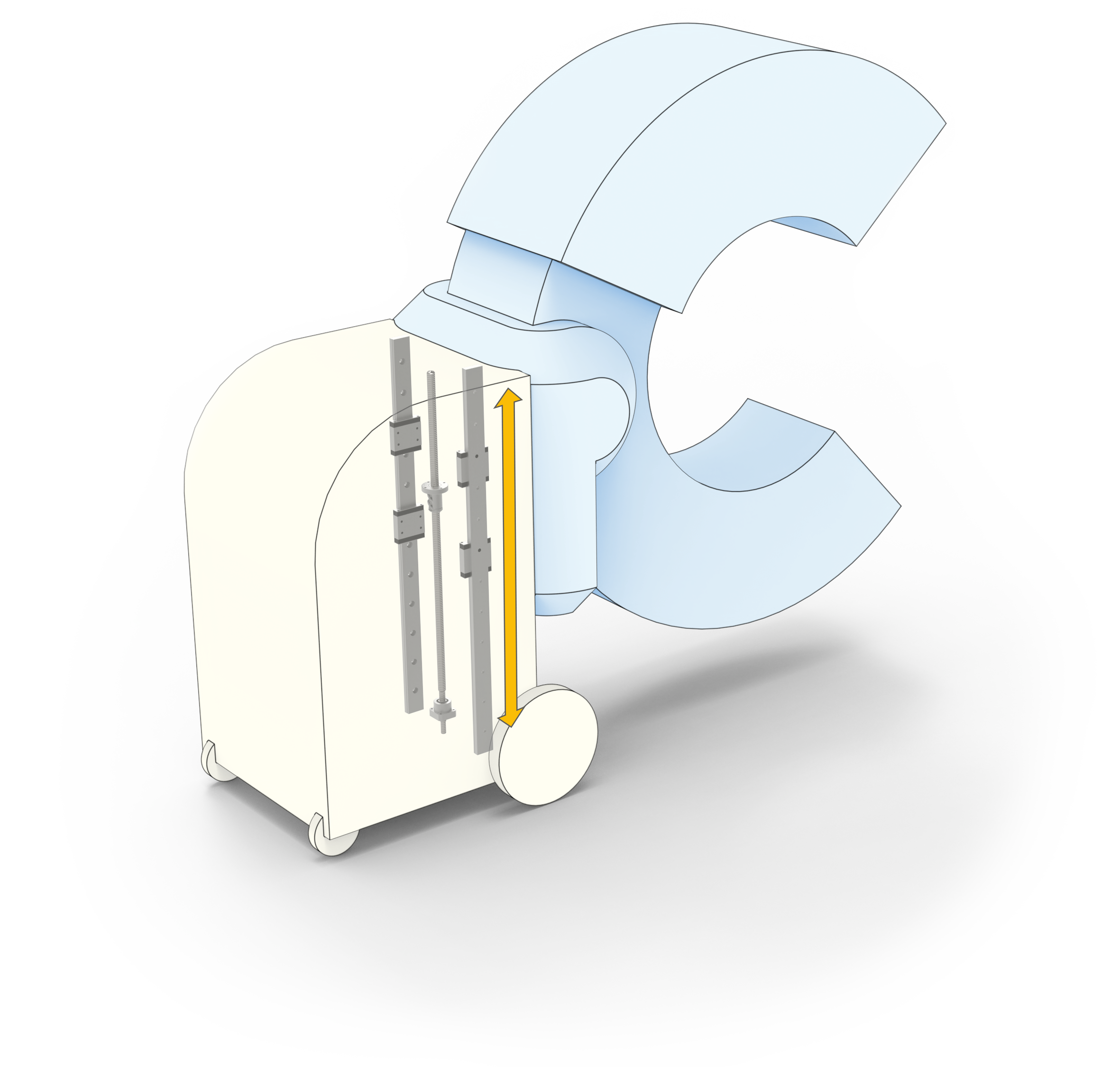
Figure 2. To enable smooth vertical and rotational adjustments in tight operating spaces, profile rail linear guides and precision ball screws deliver stable, low-vibration movement to enhance imaging accuracy and workflow efficiency.
As imaging systems become more connected, integration across devices and platforms is increasingly important. OEMs are developing imaging solutions that operate within coordinated ecosystems, where data from imaging devices, surgical systems and hospital infrastructure is shared securely and in real time. This requires motion systems that are not only mechanically optimized but also designed to integrate seamlessly within broader system architectures, supporting synchronized operation and consistent performance across the care environment.
Surgical Robotics
Dynamic imaging plays a critical role in robot-assisted surgery, enabling minimally invasive procedures with smaller incisions, reduced trauma, faster recovery times and improved patient outcomes. OEM designers leverage this to provide more options and more capable systems to POC to preplan surgeries and conduct minimally invasive procedures with faster patient healing. Robotic surgical systems combine advanced imaging with precision motion control to guide instruments and maintain accurate positioning throughout the procedure.
These systems rely on coordinated, multi-axis motion to control robotic arms and surgical tools with a high degree of precision. Real-time 3D imaging provides continuous feedback, allowing clinicians to visualize anatomy, adjust positioning and guide instruments during the procedure.
Modern surgical platforms tightly integrate imaging and robotics to enable real-time monitoring and tool positioning. In laparoscopic and minimally invasive procedures, maintaining stable, precise positioning is critical, as even small deviations can impact surgical accuracy. Motion systems must therefore deliver controlled movement, high stiffness and repeatable positioning while operating within compact, highly constrained spaces. The systems also need to integrate real-time positioning and sensors to enhance the surgeon’s work with responsive haptic feedback.
Component selection is driven by the specific requirements of each axis. Ball screw-based systems are often used in applications requiring higher speed, efficiency and smooth continuous motion. These may be appropriate for applications that position or align imaging components and robotic arms. In these cases, additional elements such as holding brakes may be incorporated to maintain position and ensure safety when motion is not actively driven.
Lead screw-based systems may be applied where compact size, controlled motion and inherent load-holding capability are beneficial. This can be seen in applications that operate at lower speeds or require stable positioning without continuous power. In both cases, the selection of actuation technology is based on aligning motion performance with the specific precision, speed and safety requirements of the application.
Efficiency
Energy efficiency is an increasingly important consideration in medical imaging system design, particularly in point-of-care. OEM designers can provide more energy-efficient and quieter systems to POC for better environmental sustainability and reduced operating costs. This feature is helpful for sizing hospital backup systems and maintaining safety.
Imaging systems can generate significant heat and consume substantial power, making efficient motion system design critical for managing thermal performance, reducing energy consumption and supporting battery powered operation. Motion transmission choices play a key role in overall system efficiency. Ball screw systems are often used in applications requiring higher efficiency as their rolling contact design reduces friction and allows more effective conversion of motor input into linear motion. This capability can enable the use of smaller motors, reduce power consumption, and support higher speeds and duty cycles ̶ benefits that are especially important in mobile or battery powered imaging systems.
Lead screw-based systems, by comparison, operate with sliding contact and, therefore, lower mechanical efficiency. This trait can result in lower noise at certain operating speeds and reduced energy within the system, which may manifest as heat under certain operating conditions. However, this characteristic can also be advantageous in applications where controlled motion and inherent load-holding capability are desired, potentially reducing the need for additional components such as holding brakes. As with all motion system decisions, the choice between lead screw and ball screw technologies depends on aligning efficiency, performance and system requirements.
Motor selection also significantly influences energy efficiency. Stepper motors are commonly used in applications requiring simple, controlled positioning, but their mechanical design and drive methodology can result in lower overall system efficiency, particularly under continuous operation or higher loads. While modern control electronics can reduce current during idle conditions, stepper systems are typically less optimized for dynamic energy efficiency compared to servo-driven solutions.
Integrated Systems
Point-of-care is not only shrinking imaging systems, it is redefining the role of motion control from a mechanical enabler to an integrated, intelligent subsystem within a distributed, software-defined imaging platform. OEM designers can leverage this to provide optimized and cost-effective systems to POC to improve reliability, durability, cost and performance. The imaging industry itself is moving toward more tightly integrated mechatronic subsystems. This involves pre-engineered systems combining a motor, drive and electronic controls. Integrations may also include gearboxes, sensors, smart linear actuators and mechatronic stages. The goal is to reduce complexity, improve performance and allow OEMs to focus on their core competencies.
A machine designer building actuators for a patient transport table, for example, would assemble a lead screw, nut, stepper motor and other components into the system, but unless they have had experience doing so, they may not do it in the most space-efficient manner. They would have to determine whether they wanted the rotating shaft to move the nut or the rotating nut to move the shaft. If they chose the latter, it would have significant location implications as the moving shaft could extend out the back of the motor.
The next level of design is incorporating control and communications capabilities to integrate motion control subsystems with other applications. For example, a treatment cell may integrate linear actuators for table positioning and detector alignment, gantries for rotary motion, and imaging software for reconstruction and visualization̶̶ all across a platform embedded in the actuators with real-time controls and feedback at the motion solutions level.
Supply Chain Optimization
Business-level integration is driving POC initiatives by generating more interest in pre-integrated motion systems. OEM designers can leverage this to secure business continuity with a local supplier for their manufacturing, and to ensure more stable and flexible production to meet POC demands. The industry is trending toward consolidation, with OEMs teaming up to provide comprehensive, integrated solutions instead of separate components. This change simplifies processes, boosts performance and allows OEMs to prioritize collaborative design for custom projects.
By partnering closely, device makers and motion system experts can fine-tune architectures, choose superior components and increase motion performance. Suppliers capable of providing the entire suite of complete solutions make diagnostic and treatment devices user friendly, especially in distributed environments, promoting platform-based, fully integrated motion systems.
These methods produce streamlined, turnkey subsystems with standardized motion across product ranges, and smooth integration between motion and control systems. This leads to an embedded infrastructure that supports efficient communication and coordination among various platforms and products.
Conclusion
Point-of-care imaging is just one example of how motion innovation is shaping the future of medical imaging. While many systems remain centralized in hospitals and imaging centers, advancements in motion technology continue to improve performance, reliability and integration across all imaging environments.
As imaging systems become more distributed, connected and application specific, motion system design is evolving to meet a broader set of requirements. Engineers must balance precision, speed, efficiency, size and reliability. This consideration requires designers to select and integrate motion technologies based on the unique demands of each application rather than relying on one solution over another.
The shift is driving greater adoption of integrated, pre-engineered motion systems that combine mechanical, electrical and control elements into optimized solutions. These systems simplify design, improve performance consistency and enable faster development cycles.
As patients’ needs continue to evolve and imaging moves closer to the point of care, motion systems will play an increasingly critical role in enabling more responsive, flexible and efficient healthcare delivery. The future of medical imaging will depend not only on advances in imaging technology but on the motion solutions that make precision, reliability and real-time performance possible.